
How to Choose Your First Turntable: 9 Hidden Costs Most Guides Ignore
Choose a first turntable by total system cost, phono compatibility, stylus support, automation, placement and exit risk—not rankings or price alone.
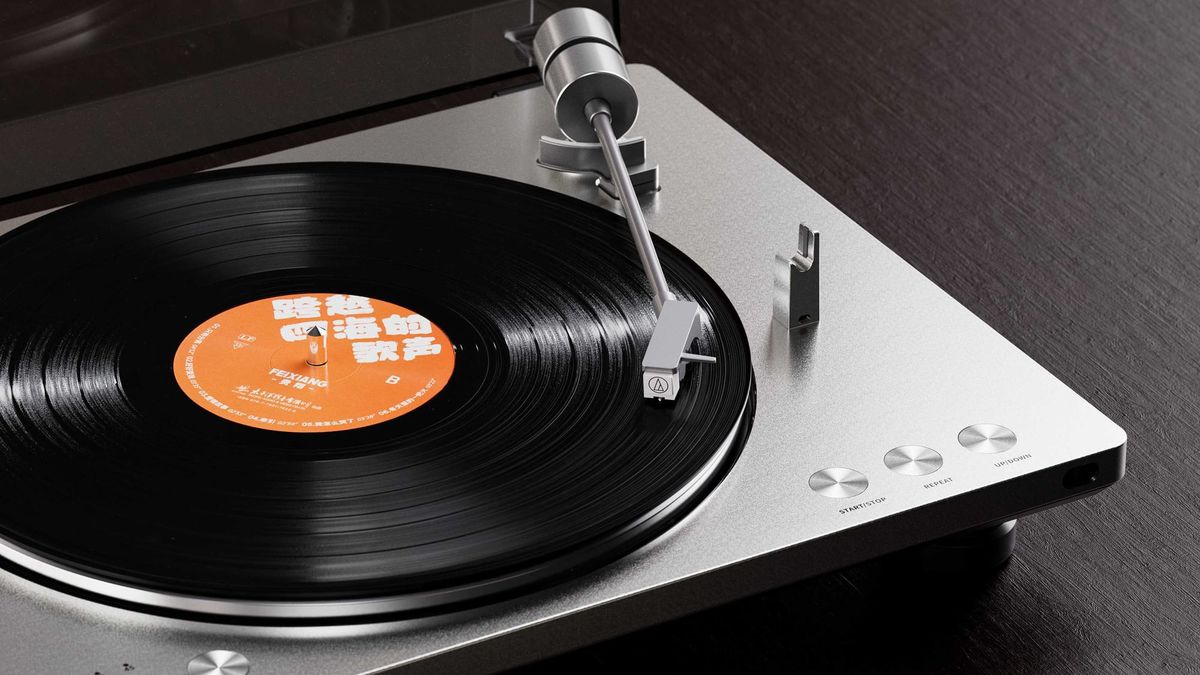
Short answer: choose your first turntable by the cost and friction of the whole system, not by the deck's headline price or a “best” ranking. A simpler automatic model may be the better purchase if it gets used every day. A more modular manual model may be better if you genuinely want setup, adjustment and future upgrades. Neither route is inherently more “audiophile.”
Editorial status: independent buying guide based on manufacturer documentation and system-design analysis. This is not a hands-on review, and the products below are examples of different architectures—not a ranking.
The question most first-turntable guides answer badly
“Which turntable should I buy?” sounds like a product question. Usually it is a behavior question disguised as one.
Will you actually clean records, store them vertically, flip sides and keep a stylus healthy? Do you already own powered speakers or an amplifier? Will the turntable sit on a stable surface away from a subwoofer? Do you want one-button playback, or does cueing the arm feel like part of the appeal?
The turntable itself is only one line in the real budget:
Total first-year cost = turntable + phono stage + speakers/amplification + records + care items + furniture/placement + replacement risk.
That is why a lower-priced deck can become the more expensive system—and why an apparently costly all-in-one signal path can sometimes be the financially sensible choice.
Before comparing models: take the 10-minute test
Do not buy yet if all three statements are true:
- You mainly want instant access to music rather than collecting physical releases.
- You do not currently have a stable, level place for a turntable.
- You would be annoyed by cleaning, side changes or occasional setup troubleshooting.
That does not mean vinyl is “bad.” It means a streamer, CD player or better speakers may solve your actual need with less friction. Vinyl makes most sense when the physical format is part of the value, not when it is treated as a guaranteed sound-quality upgrade.
1. The speakers may cost more than the turntable
A turntable does not produce room-filling sound by itself. You still need either powered speakers, or an amplifier plus passive speakers. A headphone listener also needs a suitable headphone amplifier somewhere in the chain.
For a first system, decide the output destination before choosing the source. If you already own powered speakers with an analogue input, a model with a built-in phono stage can create a short, low-risk path. If you own an integrated amplifier with a real phono input, paying again for an internal phono stage may add convenience but not necessity.
Start with our powered vs passive speaker guide if the rest of the system does not yet exist.
2. You need exactly one working phono stage—not two
A phono cartridge produces a much lower signal than a normal line-level source. Somewhere between the cartridge and your speakers, that signal needs phono gain and RIAA equalisation.
The common beginner errors are symmetrical:
- No phono stage: the result is extremely quiet and thin.
- Two phono stages: a turntable set to LINE feeds an amplifier's PHONO input, causing excessive level and distortion.
Before paying for an external box, map the signal path on paper. Our PHONO, LINE, ground and MM/MC connection guide shows the correct combinations, while built-in versus external phono stages explains when separation is useful.
3. Stylus availability matters more than upgrade mythology
A stylus is a wear item. The important question is not “Can I install an exotic cartridge one day?” It is “Can I buy the correct replacement stylus in my country, from a credible source, at a sensible price?”
Check the exact part number, regional availability and replacement instructions before purchase. A theoretically upgradeable tonearm is not much use if alignment feels intimidating and the local dealer cannot support it. Conversely, a fixed-cartridge design is not automatically disposable if the manufacturer offers a clear, affordable stylus path.
For most first-time buyers, reliable consumables beat hypothetical upgrades.
4. Automatic versus manual is a usage decision
Automatic operation does not make a turntable unserious, and manual operation does not guarantee better sound. Automation changes the daily interaction and, sometimes, the service complexity.
- Choose automatic if one-button use, safe arm return and shared-family operation will make the system play more records.
- Choose manual if you enjoy cueing, want a simpler mechanical path, or expect to adjust cartridge and tracking parameters later.
- Consider auto-stop if you like manual cueing but do not want the stylus sitting in the run-out groove indefinitely.
The right design is the one whose inconvenience you will tolerate after the novelty wears off.
5. Placement is part of the product footprint
Measure with the dust cover open, not only with it closed. Leave room for rear cables and for your hand to cue the arm. Avoid lightweight furniture that moves when you walk past, and do not place the turntable on the same resonant surface as a powerful speaker or subwoofer.
If the only available position is unstable or directly in front of a speaker, solve that first. Isolation accessories can help specific problems, but they should not be used to justify fundamentally poor placement.
6. Records and basic care are not optional extras
A useful starter budget includes records you genuinely want, inner sleeves where needed, a carbon-fibre brush, a stylus brush used according to the manufacturer's direction, and an appropriate cleaning method for used purchases.
Avoid buying a large accessory bundle on day one. Start with safe handling and simple cleaning, then add tools only when a real problem appears. The purpose is to protect records and the stylus—not to create a second hobby of buying treatments.
7. Return and setup support have financial value
Turntables combine transport-sensitive mechanics, analogue setup and sometimes Bluetooth or USB electronics. Before buying, check who pays return shipping, whether setup help is available, what evidence is required for a speed or channel-balance complaint, and whether a local dealer can inspect the product.
A slightly lower online price can be poor value if returning a large, fragile box is expensive. Keep all packaging until speed, channel balance, automatic functions and every required output have been checked.
8. “No software required” does not mean “no support risk”
Traditional analogue playback can remain usable for decades, but individual parts may still be proprietary: stylus assemblies, belts, power supplies, hinges, automatic mechanisms and cartridges. Bluetooth and USB add convenience while also adding electronic standards and driver dependencies.
Ask two separate questions:
- Can the turntable still play records if its wireless or digital features become obsolete?
- Are the mechanical wear parts documented and obtainable?
Long-term value comes from graceful fallback and parts support, not from the longest feature list.
9. Budget for the possibility that vinyl is not for you
The cheapest experiment is not always the cheapest new turntable. It may be borrowing a system, buying from a retailer with a clear return policy, or choosing a well-supported model with reasonable resale demand.
Do not build a complex upgrade path before you know that you enjoy the routine. The first turntable should teach you what matters to you with the smallest avoidable loss.
What current models actually illustrate
These examples are included because they represent different buying architectures and current search interest. Manufacturer specifications establish features; they do not establish sound-quality superiority.
| Model | Architecture it illustrates | Cost or limitation to check |
|---|---|---|
| Sony PS-LX3BT | 2026 fully automatic design with Bluetooth, wired output and built-in phono EQ | Confirm local stylus/service options and whether the fixed connection choices fit your future system |
| Audio-Technica AT-LP70XBT | Automatic belt-drive route with wireless use and a switchable built-in phono stage | Compare replacement-stylus availability and decide whether Bluetooth is genuinely useful |
| FiiO TT13 | Automatic, convenience-led system with an integrated line-output stage aimed at easy powered-speaker use | Verify regional support and whether its signal path leaves the external-phono flexibility you want |
| Fluance RT82 | Manual/modular route with auto-stop and no built-in phono preamp | Add the cost of a compatible phono input or external stage before comparing prices |
| Pro-Ject Debut EVO 2 | Manual turntable focused on a more adjustable, modular analogue path | Check cartridge configuration, phono-stage needs and dealer setup rather than assuming “manual” means ready for every beginner |
Important: this table is not a ranking and makes no comparative sound claim. Prices, packages and model availability vary by market and can change quickly.
A better way to allocate a first-turntable budget
- No existing audio system: prioritise complete signal-path cost and speaker quality. Do not let the turntable consume the entire budget.
- Powered speakers already owned: check analogue input type and volume control. A switchable internal phono stage may simplify the system.
- Amplifier with PHONO input already owned: confirm whether it supports MM, MC or both before paying for duplicated electronics.
- Upgrade-minded hobbyist: favour documented adjustment, standard parts and local dealer skill—but only if you expect to use them.
- Convenience-first household: full automation may create more real value than theoretical tweakability.
The five questions to answer before checkout
- What exact input will receive the turntable signal?
- Where is the one—and only one—phono stage in the chain?
- What is the replacement stylus part number, price and local availability?
- Can the turntable be returned economically after setup and playback testing?
- If vinyl becomes a once-a-month activity, does this purchase still make sense?
Verdict
The best first turntable is not the model with the most enthusiastic review. It is the least wasteful system that fits your real behavior, works with equipment you already own, has a credible wear-parts path and remains useful if your priorities change.
Spend for fewer points of failure, clearer compatibility and a routine you will actually enjoy. Spend less when the rest of the system is missing. Spend more only when you can name the specific problem the extra money solves.
Sources and method: Official product and support information from Sony, Audio-Technica, FiiO, Fluance and Pro-Ject; connection guidance from SoundPath Lab. Manufacturer pages are used for feature verification, not editorial ranking. Last checked 5 September 2026. No manufacturer reviewed or approved the conclusion.
Continue the research
Move from this article to a verified product decision
Use descriptive links to move between product records, brand evidence, comparisons, setup or issue guidance, and compatible-system tools. Inclusion reflects subject relevance, not a score or endorsement; product facts, recommendation eligibility, and commercial links remain separate.
Product page
Verify the exact model
Brand center
Check the wider platform
Related comparison
Compare the system role
Setup, firmware & problems
Check behavior before buying
System Builder & compatibility