
Questyle M12i vs M15C vs M15i vs M18i: Which Portable DAC/Amp Should You Buy?
Questyle M12i, M15C, M15i and M18i compared by outputs, DAC, decoding, Bluetooth, controls and real-world use. Find the right model for your headphones and phone.
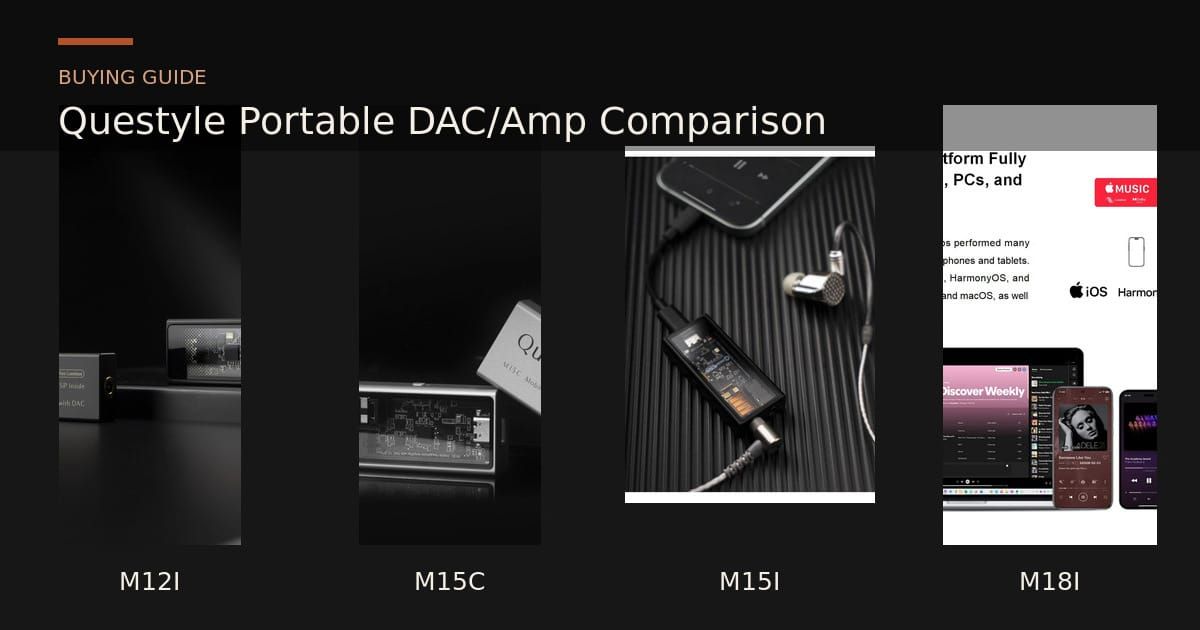
Questyle's portable DAC lineup now covers four very different buyers. The names look close, but the M12i, M15C, M15i and M18i are not simple steps on one ladder. One is a tiny 3.5mm dongle, two are dual-output wired DAC/amps, and one is a battery-powered Bluetooth receiver that can also work as a USB DAC.
If you choose only by model number or maximum sample rate, it is easy to pay for features you will never use. This guide focuses on the decisions that matter in daily listening: 3.5mm versus 4.4mm, wired versus Bluetooth, phone battery use, manual volume control, iPhone compatibility and the type of headphones you plan to drive.
Quick answer
- Choose M12i if you want the smallest, simplest 3.5mm solution for IEMs and efficient headphones.
- Choose M15C if you want 4.4mm balanced output at a lower price and do not need Bluetooth or MFi as the main selling point.
- Choose M15i if you want Questyle's most complete traditional dongle, with 3.5mm, 4.4mm, manual gain, MFi certification and PCM 768kHz/DSD512 support.
- Choose M18i if you want Bluetooth, a built-in battery, a display, hardware volume controls and the ability to use the device away from the phone.
Questyle M12i: the compact 3.5mm choice
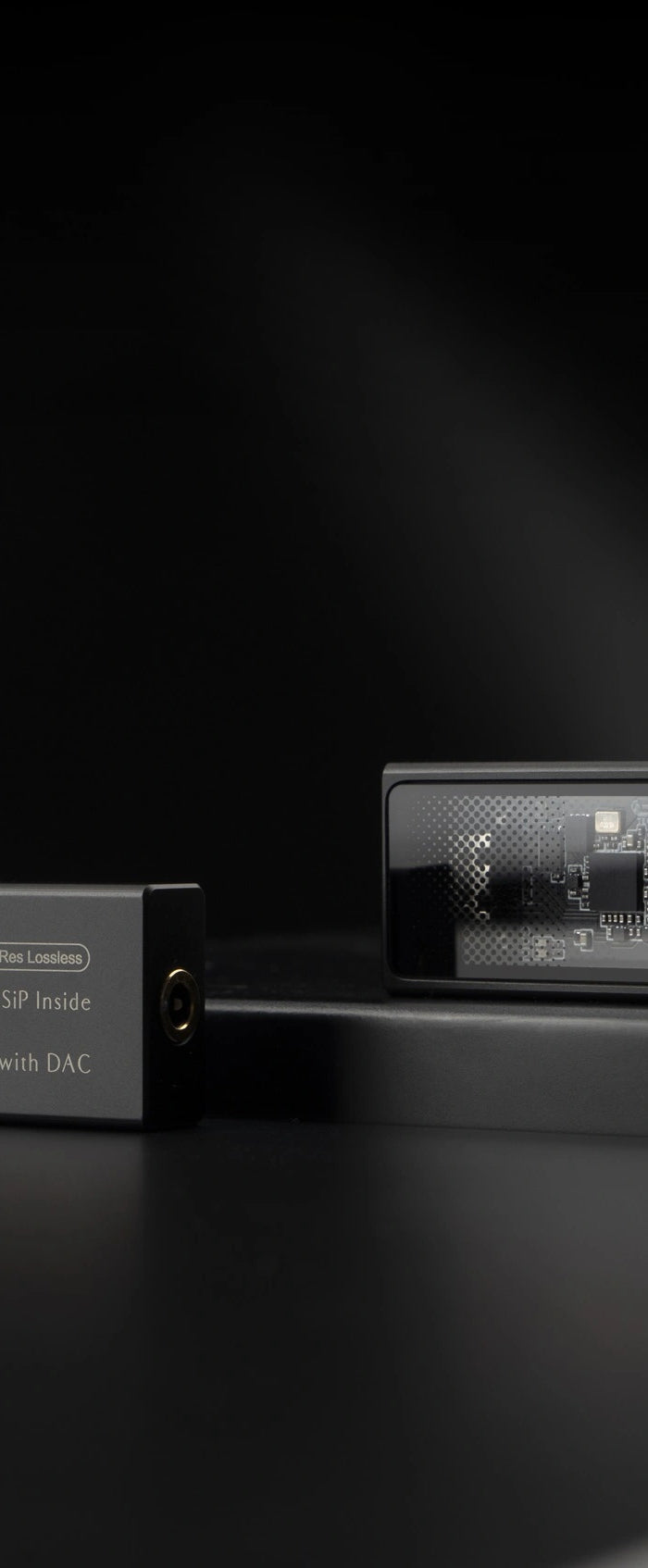
The M12i is the most straightforward product in this comparison. It uses the ESS ES9281AC DAC, supports up to PCM 32-bit/768kHz and DSD512, and carries Apple MFi certification. Its only headphone socket is 3.5mm, so there is no reason to buy it if your main cable is 4.4mm balanced.
Instead of a physical gain switch, the M12i automatically adjusts its operating mode according to the connected load. That keeps the device small and easy to use, but it also gives the listener less control. Unusual low-impedance, low-sensitivity headphones and some high-impedance loads may not behave as predictably as they would with manual gain selection.
Best for: commuters, first-time dongle DAC buyers, users of sensitive IEMs, and anyone who values pocket size more than balanced output.
Think twice if: you already own 4.4mm cables, regularly swap between very different headphones, or want physical gain and volume controls.
Buy Questyle M12i on Amazon
Buy Questyle M12i from EMiUZEK
Questyle M15C: balanced output without paying for every extra
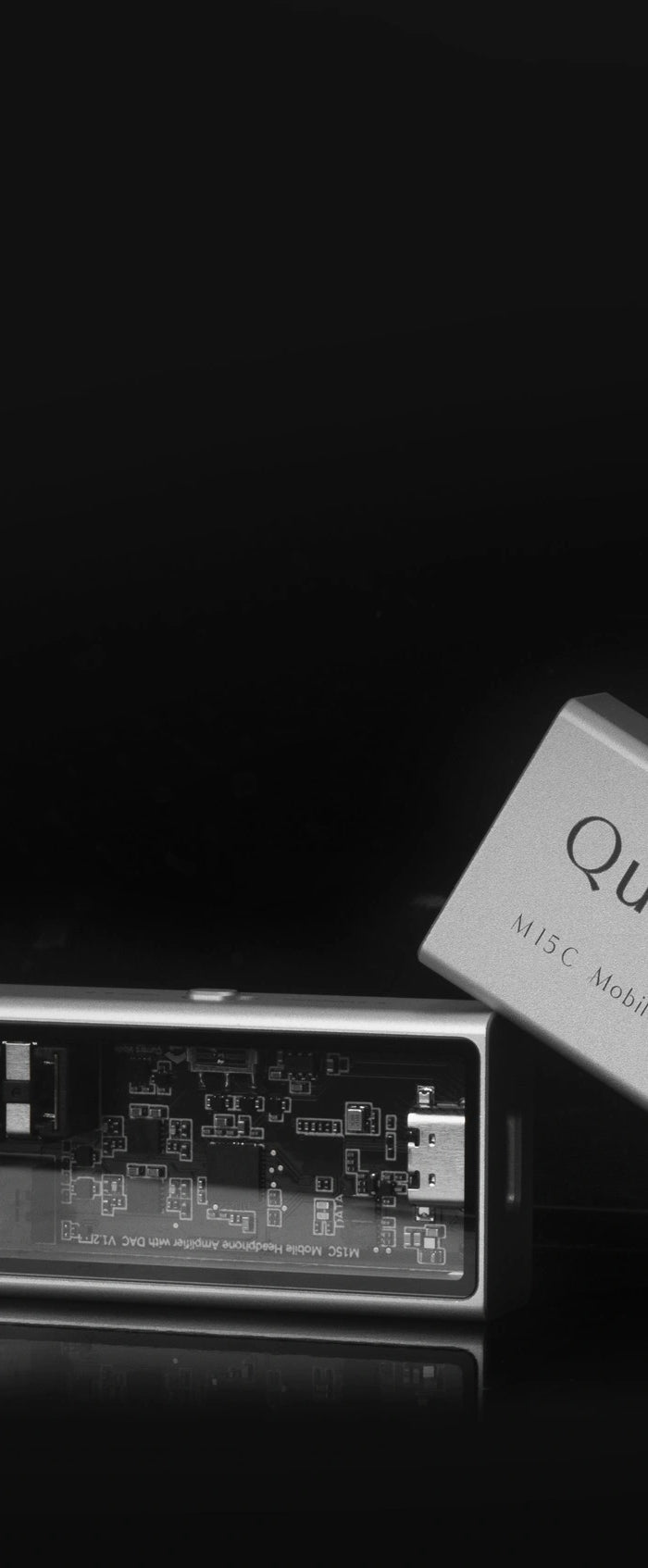
The M15C is the practical middle option. It uses a Cirrus Logic CS43198 DAC, provides both 3.5mm single-ended and 4.4mm balanced outputs, and supports PCM up to 32-bit/384kHz plus DSD256. A manual standard/high gain switch makes it easier to match sensitive earphones and more demanding headphones.
Its decoding numbers are lower than those of the M12i and M15i, but that should not be the deciding factor. Most real music libraries and streaming services do not require PCM 768kHz or DSD512. For many buyers, having a 4.4mm socket and manual gain is more useful than supporting extreme file formats.
Best for: value-focused 4.4mm users, mixed IEM and headphone collections, Android and USB-C laptop listeners, and buyers who want manual gain without moving to a battery-powered device.
Think twice if: MFi certification is central to your buying decision, you want Bluetooth, or you specifically collect DSD512 and very high-rate PCM files.
Buy Questyle M15C on Amazon
Buy Questyle M15C from EMiUZEK
Questyle M15i: the complete wired dongle
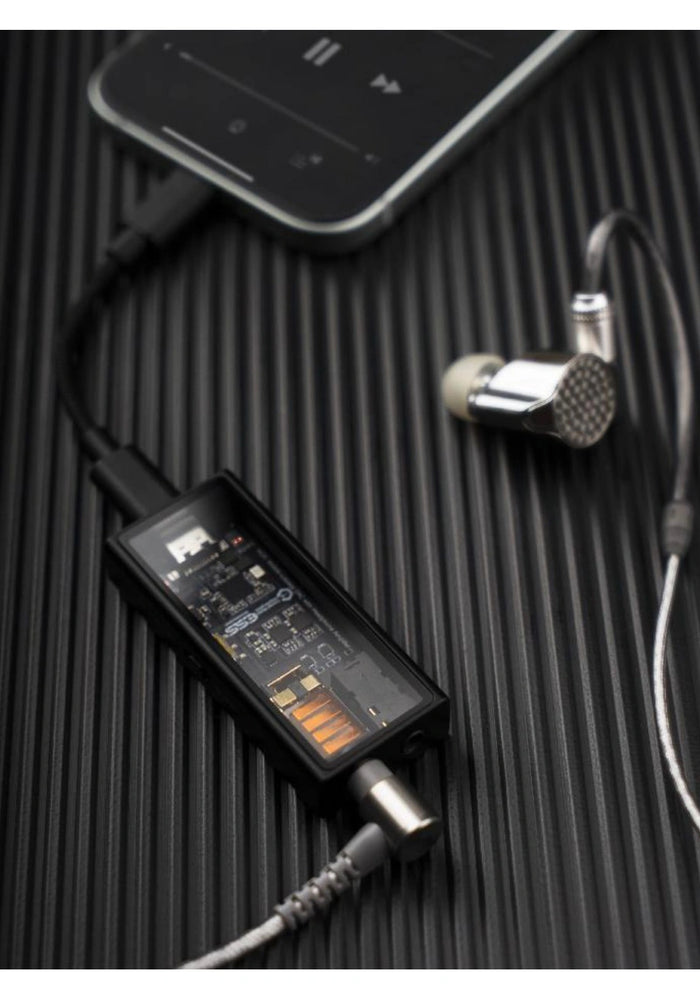
The M15i is the safest all-round recommendation for someone who wants a conventional wired dongle and does not want to wonder later whether they should have bought the balanced model. It uses the ESS ES9281AC, supports PCM up to 32-bit/768kHz and DSD512, and offers both 3.5mm and 4.4mm outputs.
Compared with the M12i, its manual gain switch is more useful when moving between sensitive IEMs and full-size headphones. Compared with the M15C, the headline advantages are MFi certification, the ESS decoding platform and the higher maximum format support. Those benefits matter most to
Product profile: Questyle M18ihttps://www.soundpathlab.com/product-profile-questyle-m18i/
Apple users and buyers who want the most complete wired model, not necessarily to everyone seeking the best value.
Best for: iPhone and iPad users, enthusiasts with both 3.5mm and 4.4mm cables, listeners who rotate several headphones, and anyone seeking the strongest all-round wired choice.
Think twice if: your headphones are easy to drive and 3.5mm-only, or if the lower-priced M15C already covers all your real needs.
Buy Questyle M15i on Amazon
Buy Questyle M15i from EMiUZEK
Questyle M18i: Bluetooth receiver and USB DAC in one
The M18i is a different category of product. It uses dual ESS ES9219Q DACs, supports wired USB playback up to PCM 32-bit/384kHz and DSD256, and adds Bluetooth 5.4 with codecs including LDAC and aptX Adaptive. It also has its own battery, display, physical volume controls, microphone and 3.5mm/4.4mm outputs.
That design reduces the need to keep a dongle hanging directly from a phone. You can place the phone on a desk or in a bag and keep the M18i with your headphones. The trade-offs are obvious: it is larger, costs more, needs charging, and introduces a Bluetooth path when used wirelessly. Wired USB remains available when maximum signal fidelity is the priority.
Best for: people who dislike cables hanging from a phone, Bluetooth headphone users who want to keep wired IEMs, commuters who need physical volume controls, and listeners who switch between wireless and USB DAC use.
Think twice if: you only listen wired, want the smallest possible device, or do not want another battery to charge.
Buy Questyle M18i on Amazon
Buy Questyle M18i from EMiUZEK
Specification comparison
| Feature | M12i | M15C | M15i | M18i |
|---|---|---|---|---|
| Product type | USB dongle DAC/amp | USB dongle DAC/amp | USB dongle DAC/amp | Bluetooth receiver + USB DAC/amp |
| DAC platform | ESS ES9281AC | Cirrus Logic CS43198 | ESS ES9281AC | Dual ESS ES9219Q |
| Maximum wired decoding | PCM 32/768, DSD512 | PCM 32/384, DSD256 | PCM 32/768, DSD512 | PCM 32/384, DSD256 |
| Headphone outputs | 3.5mm | 3.5mm + 4.4mm | 3.5mm + 4.4mm | 3.5mm + 4.4mm |
| Gain control | Automatic | Manual standard/high | Manual low/high | Manual gain control |
| Bluetooth | No | No | No | Bluetooth 5.4 |
| Built-in battery | No | No | No | Yes |
| Display and volume buttons | No | No | No | Yes |
| MFi positioning | Yes | Not the main feature | Yes | Check cable and device compatibility |
| Best reason to buy | Smallest and simplest | Best-value 4.4mm option | Best all-round wired model | Most flexible wireless/wired model |
Maximum decoding support does not by itself determine audible quality. Cable type, headphone sensitivity, gain behavior, phone compatibility and daily convenience are usually more important.
Which model fits which listener?
For sensitive IEMs and everyday commuting
Start with the M12i if you use 3.5mm cables and want the least bulk. Choose the M15C if your IEM cable is already 4.4mm or you want manual gain control.
For full-size headphones
The M15i is the more flexible wired choice because its manual gain and dual outputs make headphone matching easier. Do not assume that any small USB dongle replaces a high-voltage desktop amplifier for every difficult planar or high-impedance headphone.
For iPhone and iPad
The M12i and M15i are the most natural starting points because MFi certification is part of their positioning. USB-C iPhones are simpler to connect. Older Lightning devices may require a compatible Lightning-to-USB cable rather than an ordinary charging cable.
For listeners who hate a cable hanging from the phone
Choose the M18i. It is the only model here designed to work as a self-powered Bluetooth receiver. Its screen and physical controls also make sense when the phone stays in a pocket or bag.
For the best price-to-feature balance
The M15C is the value pick when 4.4mm matters. Paying more for the M15i makes sense when you specifically want MFi certification, the ESS platform, higher format ceilings or the more premium all-round dongle. Paying more for the M18i only makes sense if you will actually use Bluetooth, its battery and its hardware controls.
Firmware and support check — Updated August 17, 2026
Questyle's official support page provides separate firmware download entries for the M12i/M15i group, M15C and M18i. That separation matters: a firmware package intended for one model should not be assumed to apply to another device simply because the product names are similar.
Before updating, record the currently installed version, confirm the exact model printed on the device or packaging, read the instructions bundled with the download and keep the unit powered and connected exactly as Questyle specifies. The public support index confirms that model-specific packages exist, but it does not expose a complete version number and release date for every package in the page text. SoundPath Lab therefore does not label any package as the current version without product-level verification.
Official support source: https://questyle.com/download
Firmware and versions reviewed: Questyle's public support index was rechecked on August 17, 2026. It lists separate firmware download entries for M12i/M15i, M15C and M18i, but the public index does not provide a complete version and date record for every package. Current-version status remains pending product-level verification.
Last checked: August 17, 2026.
Revision note: Updated August 17, 2026 — Added a model-specific firmware check and linked Questyle's official download center. No specification or purchasing recommendation changed.
Final recommendation
There is no single winner because the M18i solves a different problem from the other three. For most 3.5mm IEM owners, the M12i is enough. For a budget-conscious buyer who wants 4.4mm, the M15C is the smart choice. For the strongest traditional wired recommendation, choose the M15i. For wireless freedom and the broadest daily functionality, choose the M18i.
Before ordering, check your headphone plug, phone connector and regional package contents. Prices, stock and included cables can change by seller and market.
Purchase links are provided for convenience. Availability, price, plug type and included accessories may vary.
Evidence basis: Buying Guide — not independently tested by SoundPath Lab. Specifications and product positioning were checked against Questyle product materials on 7 August 2026. Retail purchase links are provided for convenience and did not determine the recommendations.
Evidence & verification
Evidence basis: Questyle product specifications and manufacturer information, with editorial comparison of features, output options and user fit. This is not a simultaneous hands-on or measurement review of all four models.
Firmware and versions reviewed: M12i, M15C, M15i and M18i specifications available on August 7, 2026. Phone compatibility and control behavior can depend on operating-system and app versions; no single firmware build applies across the four devices.
Last checked: August 7, 2026.
Limitations: Output power into a stated load does not by itself predict sound quality or suitability for every headphone. Battery drain, heat, RF behavior and compatibility were not independently tested across all phones and computers.
Commercial disclosure: This article includes links to independent third-party retailers. Those links do not determine the product shortlist or recommendation. Full disclosure:https://www.soundpathlab.com/disclosure-funding/
Manufacturer reference: https://www.questyle.com/
Related reading: https://www.soundpathlab.com/tag/buying-guides/ | https://www.soundpathlab.com/fiio-ft1-vs-ft1-pro-buying-guide/ | Open System BuilderCurrent official-store routes
These manufacturer-store links are provided as a neutral availability check and do not affect the verdict or ranking.
- Questyle M12i — official store
- Questyle M15C — official store
- Questyle M15i — official store
- Questyle M18i — check the official store for the current listing
Checked September 3, 2026. Exact-model availability, pricing and regional warranty can change.
Continue the research
Move from this article to a verified product decision
Use descriptive links to move between product records, brand evidence, comparisons, setup or issue guidance, and compatible-system tools. Inclusion reflects subject relevance, not a score or endorsement; product facts, recommendation eligibility, and commercial links remain separate.
Product page
Verify the exact model
Brand center
Check the wider platform
Related comparison
Compare the system role
Setup, firmware & problems
Check behavior before buying
System Builder & compatibility