Bookshelf vs Floorstanding Speakers: Choose by Room, Bass and Placement
Choose bookshelf or floorstanding speakers by listening distance, bass target, placement, amplifier load and total system cost—not cabinet size alone.

Evidence label: Buying Guide / Technical Analysis. This article is based on loudspeaker setup principles and published manufacturer guidance; it is not a hands-on comparison of specific models.
Short answer: Neither cabinet type is automatically better. Bookshelf speakers can be the more rational choice in a small room or a subwoofer-based system. Floorstanding speakers can provide greater bass extension and output, but they still need suitable placement and amplifier compatibility. Buy for the room, listening distance and total system—not for the size of the box.
The labels describe form, not quality
A “bookshelf” speaker is usually a compact stand-mount design. Despite the name, many models work best on rigid stands with space around them. A floorstanding speaker uses a taller cabinet and often more or larger drivers. That can increase acoustic output and low-frequency extension, but it does not guarantee better tonal balance, imaging, distortion or reliability.
Price also does not settle the question. A well-designed compact speaker can outperform a poorly designed tower, while a floorstander may deliver the bass and level a small enclosure cannot. Compare documented bandwidth, sensitivity, impedance, maximum output and return terms—not cabinet height alone.
Start with room and listening distance
The farther you sit and the louder you listen, the more output the system needs. A near-field desk or small-room system often needs less acoustic output than a large open-plan room. In a difficult room, a larger speaker can excite more low-frequency problems rather than solve them.
- Small room or short distance: compact speakers may provide enough output while leaving more freedom to adjust position.
- Large room or longer distance: a floorstander may offer more headroom, especially without a subwoofer.
- Shared walls or moderate listening levels: extra bass capability may have little practical value.
Before buying, measure the intended listening distance and note how close the speaker must sit to the front and side walls. Placement limits can matter more than the nominal room area.
Bass: extension is not the same as accuracy
A larger cabinet can usually support deeper or louder bass, but room boundaries create peaks and cancellations. A tower placed where furniture dictates may produce less even bass than a compact speaker and a properly positioned subwoofer.
If you want strong movie effects or full-range reproduction at higher levels, compare two complete solutions: a floorstanding pair, and compact speakers plus one or two suitably chosen subwoofers. The second option adds setup complexity but allows bass sources to be positioned independently of the main speakers.
If you already plan to use a subwoofer and apply an appropriate crossover, paying extra only for tower bass extension may be unnecessary. The tower can still offer useful mid-bass output and headroom, but the benefit should be demonstrated rather than assumed.
Stands, footprint and real space
Bookshelf speakers are not automatically smaller in use. Add the stand footprint, cable clearance and recommended wall distance. A compact speaker on a wide stand may occupy almost the same floor area as a slim tower. Include the stand price, filling material, isolation or floor protection in the budget.
Floorstanders remove the stand purchase but can be heavier to unpack, position, return and protect from tipping. In homes with children or pets, stability is a real purchasing criterion.
Amplifier matching still matters
Do not use speaker size as a shortcut for electrical difficulty. Check sensitivity together with impedance and the manufacturer’s recommended amplifier range. A compact design can be demanding; a large tower can be relatively efficient. Published nominal impedance alone does not reveal every load variation, so treat incomplete specifications as uncertainty.
For a fair comparison, listen at matched levels. A slightly louder speaker is often perceived as more detailed or exciting even when the difference is mostly volume.
Hidden costs
- Stands, mounting hardware and floor protection for compact speakers.
- A subwoofer, longer signal cable and calibration time if deeper bass is required.
- Higher delivery or return costs for large floorstanders.
- Amplifier replacement if the chosen speaker presents an unsuitable load.
- Room treatment or measurement tools when placement alone cannot control reflections and bass.
Decision guide
| If this describes you | Start with | Why |
|---|---|---|
| Small room, short listening distance, moderate volume | Bookshelf | Often sufficient output with more placement flexibility. |
| You already intend to use a subwoofer | Bookshelf or compact tower | Compare total cost and output above the crossover. |
| Large room, longer distance, no subwoofer | Floorstanding | Potentially more bass extension and headroom. |
| Furniture forces speakers close to walls | Whichever model documents suitable placement | Cabinet type does not override boundary interaction. |
| Children, pets or frequent moves | Evaluate stability and weight first | Practical safety and handling can decide the format. |
Before you buy
- Mark the real speaker positions and listening seat.
- Check the manufacturer’s placement, impedance and amplifier guidance.
- Budget the complete system, including stands or subwoofer.
- Confirm return policy and delivery cost, especially for heavy towers.
- If possible, compare at matched volume in your room or with a meaningful home-trial period.
Verdict
Choose bookshelf speakers when their output and bass plan fit the room, particularly when flexibility or subwoofer integration matters. Choose floorstanders when you need verified headroom or bass extension and can give them appropriate space. The better purchase is the system with fewer compromises in your room—not the larger cabinet.
Sources
- Genelec — monitor placement guidance
- Genelec — selecting monitors for room and listening distance
- Genelec — room acoustics and calibration
- Dolby — speaker setup guidance
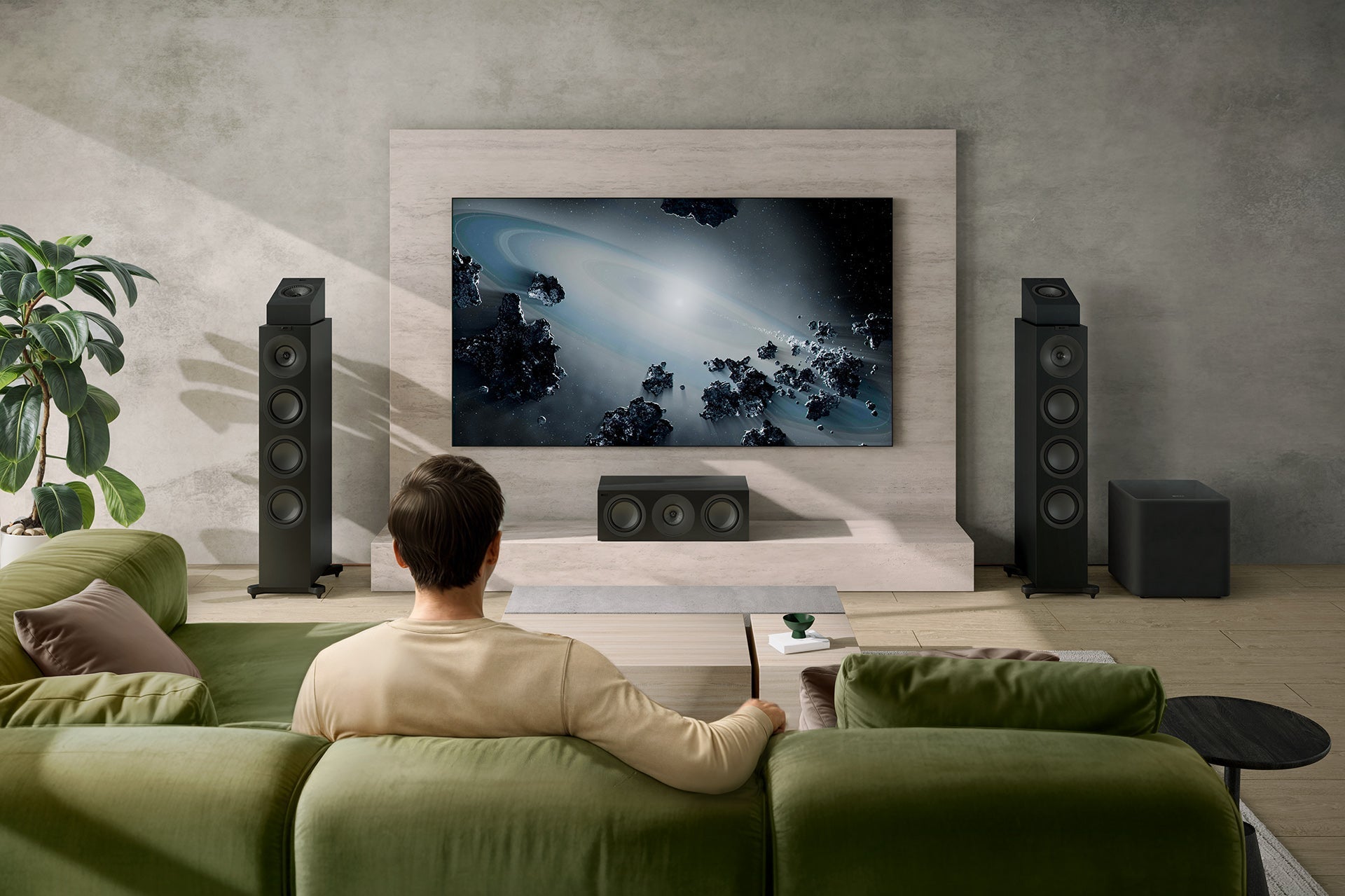
Last checked: 5 September 2026. Manufacturer guidance is used for setup principles, not brand ranking. The pictured products illustrate formats only. No affiliate relationship or product price determined the conclusion.
Continue the research
Move from this article to a verified product decision
Use descriptive links to move between product records, brand evidence, comparisons, setup or issue guidance, and compatible-system tools. Inclusion reflects subject relevance, not a score or endorsement; product facts, recommendation eligibility, and commercial links remain separate.
Product page
Verify the exact model
Brand center
Check the wider platform
Related comparison
Compare the system role
Setup, firmware & problems
Check behavior before buying
System Builder & compatibility