Arylic LP10 vs LP20: Which Network Streamer Fits Your System?
Compare Arylic LP10 and LP20 by streaming protocols, TV integration, subwoofer control, trigger, USB roles and system fit.
Evidence label: Comparative Analysis — specification-based, not a simultaneous hands-on or measured test. Arylic product information was checked on 1 September 2026.
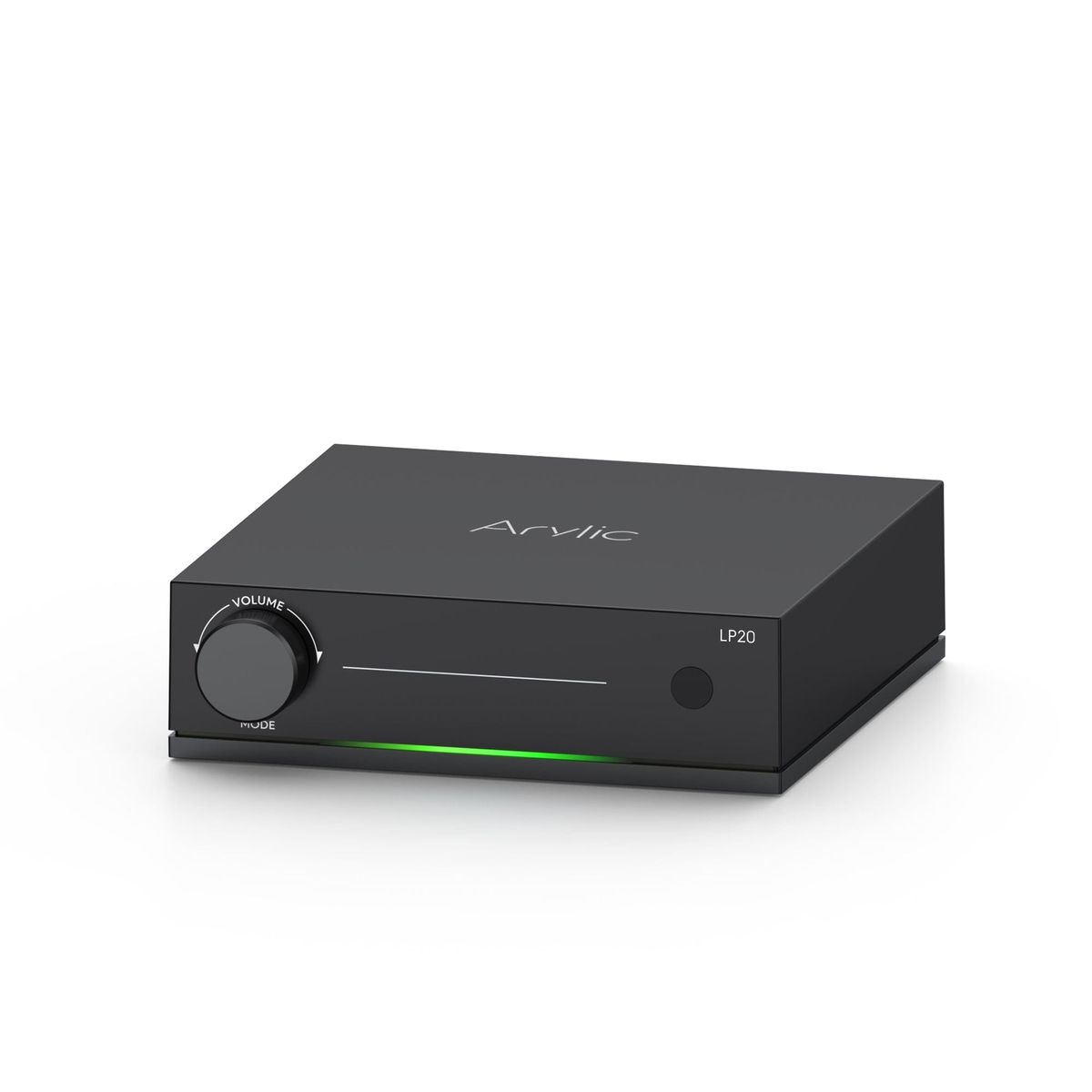
Arylic LP10 and LP20 overlap as network streamers, but they are aimed at different systems. LP10 is the simpler value route for adding modern streaming and useful physical connections. LP20 is the broader system-control model, intended to handle more sources and more 2.1-system responsibilities.
Short answer
- Choose LP10 for a lower-complexity streamer with AirPlay 2, Google Cast, Ethernet, USB storage, a display and remote control.
- Choose LP20 when the streamer must also manage TV input, subwoofer integration, trigger control and a wider set of digital/analogue connections.
Key differences
| Decision factor | Arylic LP10 | Arylic LP20 |
|---|---|---|
| Primary role | Budget network streamer | Expanded streaming preamplifier/system hub |
| AirPlay 2 | Listed | Listed |
| Google Cast | Listed | Listed |
| Ethernet | Yes | Yes |
| HDMI TV integration | Not the primary design | Documented on the product platform |
| Dedicated subwoofer path | No dedicated managed subwoofer output listed | Yes |
| 12 V trigger | No | Yes |
| Best fit | Adding streaming to an existing amplifier | Building a more integrated stereo/2.1 control centre |
LP10 covers the essential streaming brief
LP10 is the straightforward choice when an existing amplifier or powered-speaker system already controls volume and sources. Arylic lists AirPlay 2 and Google Cast alongside Ethernet, Wi-Fi, optical output, analogue connections, USB playback, a display and remote control. That combination is unusually broad for a budget source.
LP10 should still be evaluated as a source, not as a universal preamplifier. Check output level, downstream volume control and the exact role of each USB port before wiring a system.
LP20 is for systems with more control responsibilities
LP20 adds the features that matter when the streamer becomes the system hub: TV-oriented input, dedicated subwoofer handling, trigger control and expanded digital/analogue routing. Those additions can reduce the need for separate boxes in a living-room stereo or 2.1 system.
The extra connections add value only when they solve an actual installation need. A buyer using one digital output into an existing integrated amplifier may not benefit from LP20’s broader control architecture.
Which should you buy?
Choose Arylic LP10 if:
- You want AirPlay 2 and Google Cast in a simpler source.
- Ethernet, USB storage, a display and remote are useful.
- Your amplifier already handles TV, volume and subwoofer duties.
- You prefer the lower-complexity route.
Choose Arylic LP20 if:
- The streamer must act as a preamplifier or system hub.
- You need the documented TV-input route.
- You need a dedicated subwoofer path or 12 V trigger.
- Expanded input/output routing can replace other hardware.
What remains to be verified
This article does not claim a listening, reliability or measurement winner. App behaviour, firmware, resampling, analogue output, latency, subwoofer filters and recovery after network or power interruption require hands-on evidence. QA403 results will be added only after the analyser and test conditions are documented.
Continue the decision
- Arylic LP10 product profile
- Arylic LP20 product profile
- Does Arylic LP10 support AirPlay 2 and Google Cast?
- LP10 questions and owner discussion
- System Builder
Official sources
Entity IDs: product:arylic-lp10 · product:arylic-lp20
Last checked: 1 September 2026 · Commercial relationship weight: 0
Continue the research
Move from this article to a verified product decision
Use descriptive links to move between product records, brand evidence, comparisons, setup or issue guidance, and compatible-system tools. Inclusion reflects subject relevance, not a score or endorsement; product facts, recommendation eligibility, and commercial links remain separate.
Product page
Verify the exact model
Brand center
Check the wider platform
Related comparison
Compare the system role
Setup, firmware & problems
Check behavior before buying
System Builder & compatibility